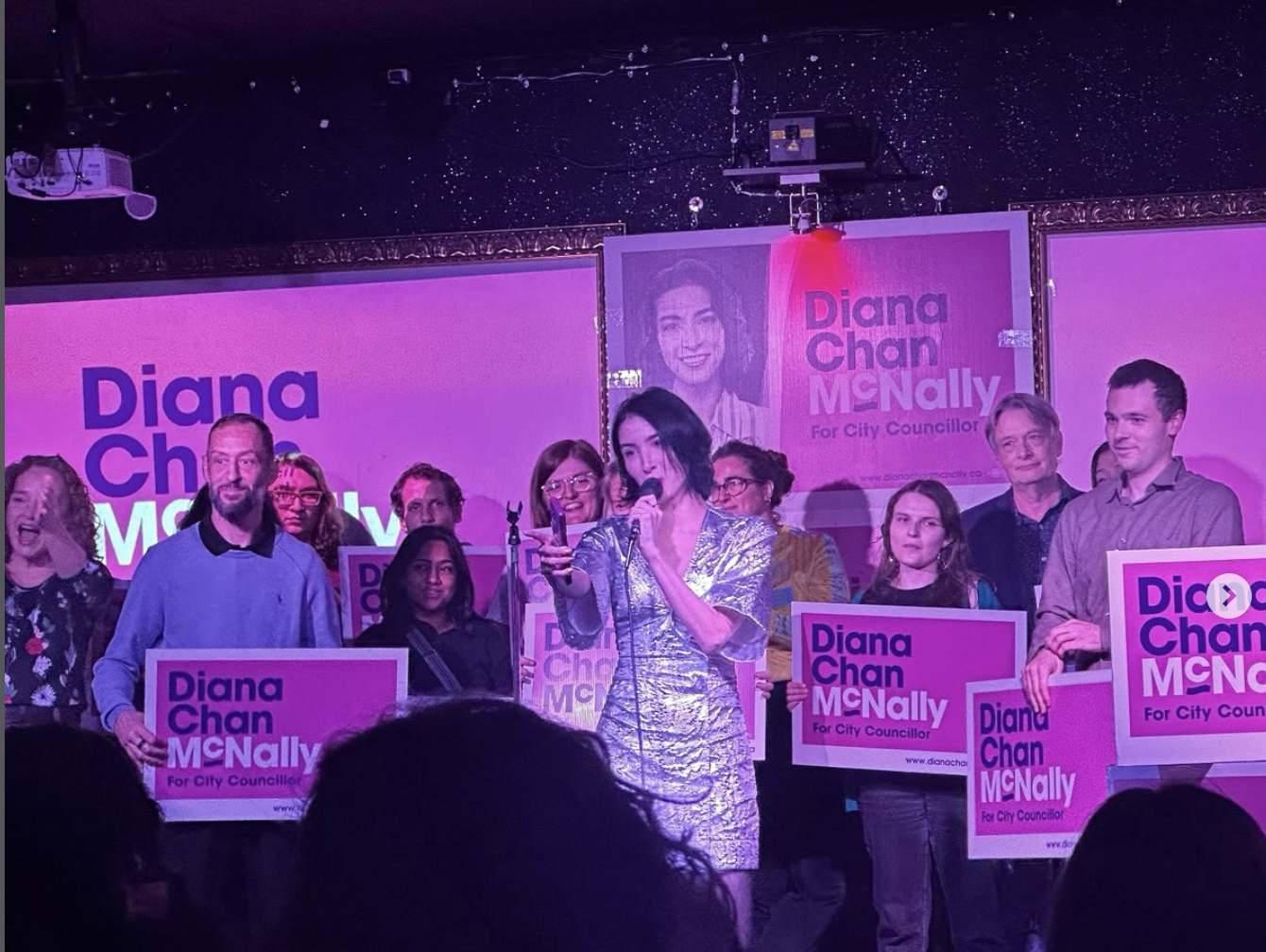
Diana Chan McNally for Parkdale—High Park
Case study · Electoral campaign · 2026
A first-time candidate with a long, outspoken record ran on community, care and an alternative vision, and won a ten-person open race by nearly 15 points.
Client
Diana Chan McNally campaign, Toronto City Council, Ward 4
My Role
Independent strategic advisor, communications and digital
Outcome
Elected, 20,314 votes (42.47%)
Margin
7,039 votes over the runner-up
Context
In April 2026, Gord Perks announced he would not seek re-election after 20 years as Ward 4's councillor (CP24). Diana Chan McNally, a crisis worker and housing advocate, entered a field of ten candidates in May, including a three-time provincial Liberal candidate backed by prominent local Liberals (Toronto Star).
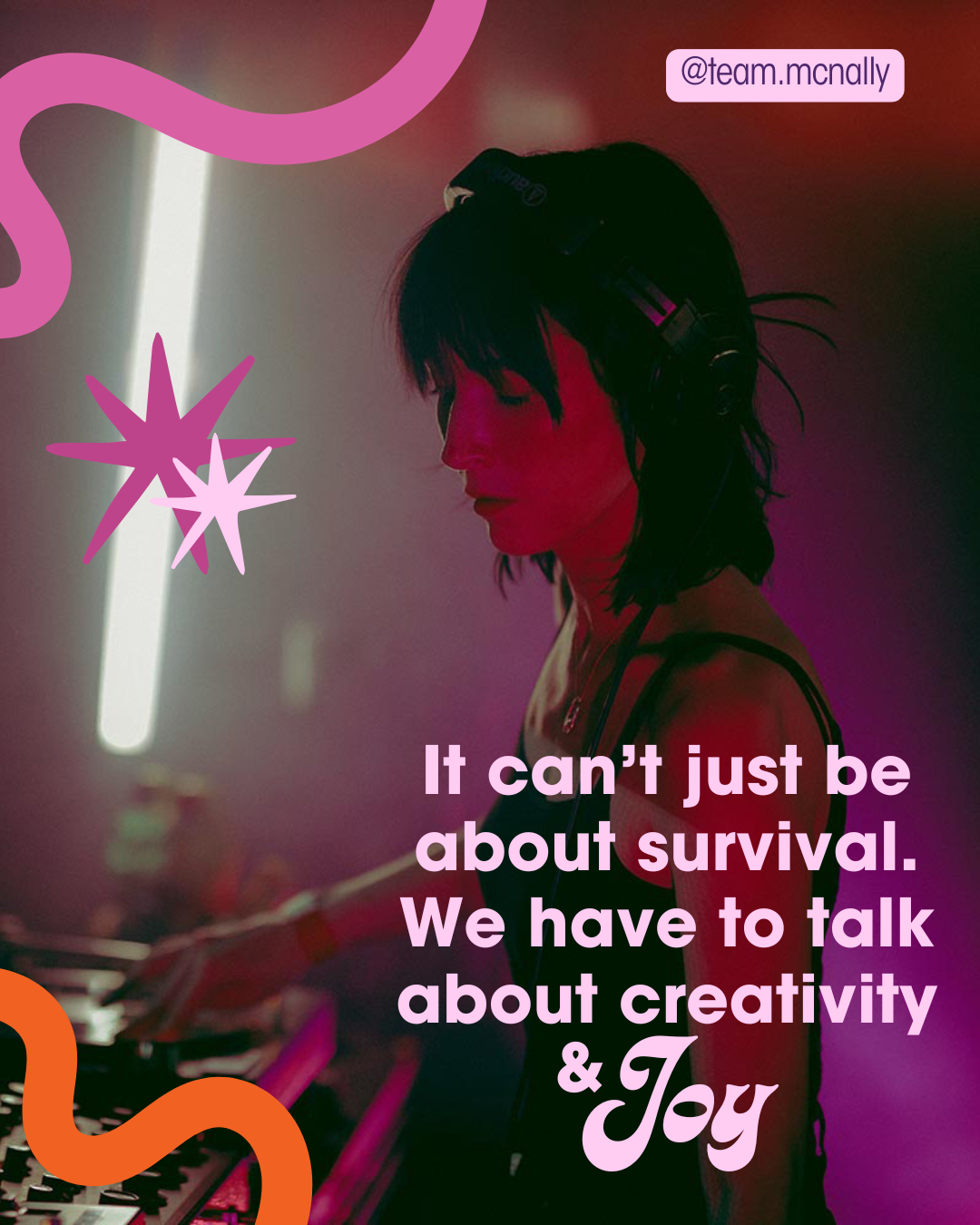
Diana brought lived experience, a record of real wins on housing and harm reduction, deep ties to community agencies, and real joy on the doors. The usual playbook would have smoothed the edges and steered around the hard issues. The campaign chose differently.
My Role
Through Terra Etc., I co-created the campaign brand from day one, built the message box and policy activation guide, launched the Team McNally channels, designed the email journeys and fundraising program, helped plan rapid-response communications, and wrote and produced much of the campaign's content in its first several months. I advised on strategy throughout.
The Approach
A message box built on values
Using Marshall Ganz's Story of Self, Us, and Now, the campaign distilled down to a few single-breath messages and one north star: the campaign is the community. Things can be better, and we build it together. A tiered policy guide gave a small team the confidence to talk about housing, harm reduction and encampments directly. The campaign led with Diana's record, not the race, and never defined itself against anyone.
Two accounts, one movement
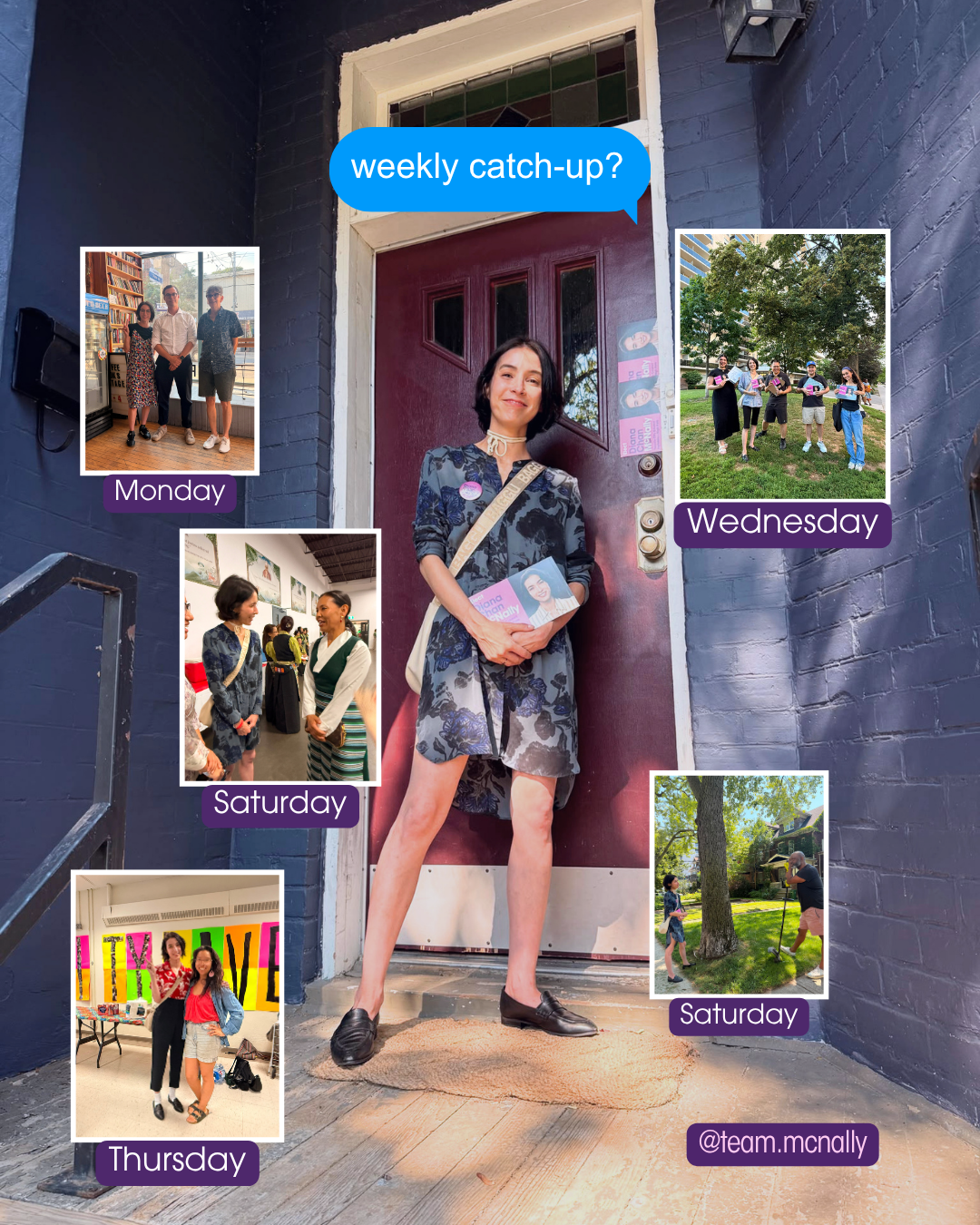
Diana's personal channels stayed in her own voice. Team McNally, named to build recognition of the name as it would appear on the ballot, carried volunteer recruitment, explainers, behind-the-scenes content and GOTV. Reusable templates, clear content pillars and batch production kept the account sustainable for a volunteer team, and showed that this was a campaign of neighbours.
Campaigning for the term, not just election day
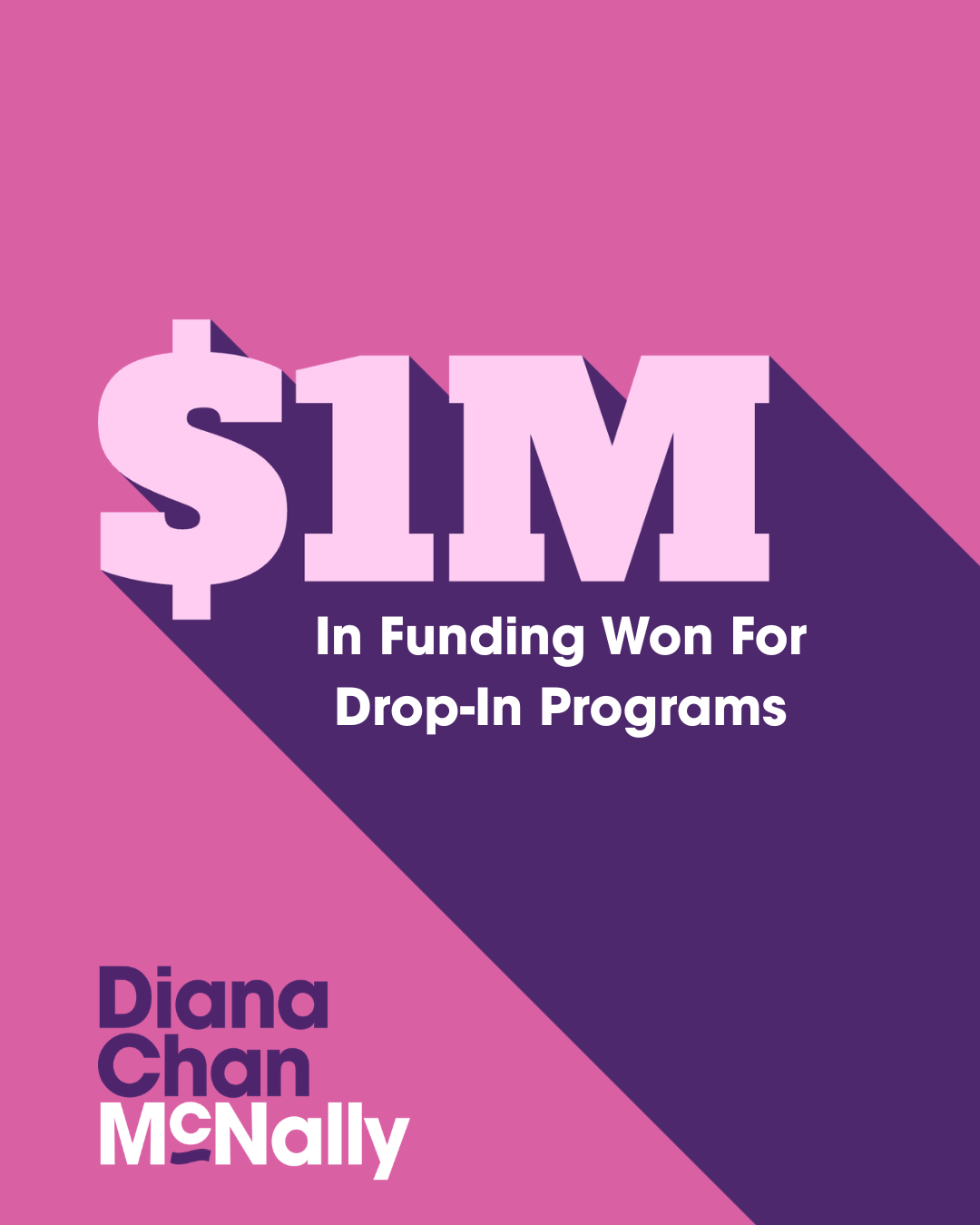
Votes were treated as relationships, not a one-time resource. A rapid-response petition on the proposed Billy Bishop airport expansion, a co-organized clothing drive and shareable community resources were central to the campaign, not distractions from it. Events were held at the same places that served as clothing-drive drop-offs, and endorsements came from familiar faces in that community work. Team McNally now carries on as the council office account with an audience already built in.
Fundraising as an extension of the work
Email fundraising followed clear, consent-based principles and responded to engagement data. The standout ask was the Hub Fund: a campaign office that would double as a community hub, with gifts tied to tangible things like a community fridge and a resource shelf. It was "the same work, with a bigger room."
Show, don't tell
The campaign put Diana's record front and centre, kept the community updated on progress, and kept its promise to run a positive campaign: no attacks on other candidates, no problems without solutions, and no dodging hard issues for convenience.
Results
20,314 Votes
Campaign won with 42.47% of the vote in a field of 10 candidates (City of Toronto)
7,039
Vote margin over the runner-up (City of Toronto)
29% → 42%
A Forum poll had her trailing 32% to 29%. She won 42% to 28% (TorontoToday)
The campaign was powered by small donors, with most of the money coming from neighbours giving what they could, and by hundreds of volunteers and a large, engaged, consent-based email list.
What this campaign proves
Community-driven campaigns win. Volunteers, small donors and residents shaping the platform were the strategy, and the communications made them visible.
Principle can beat caution. The candidate who talked about housing, harm reduction and encampments directly won by nearly 15 points.
An alternative vision beats cynicism. The campaign never ran against anyone. It ran for something, and invited people in to build it.