Rising Tides: A Fundraising Resilience Toolkit
Across the Canadian nonprofit sector, it feels like the tide has gone out and just…stayed there. Funding cuts, forced austerity, and ever-growing reporting demands are stretching teams past capacity while community needs keep rising. Grassroots, equity-driven organizations are asked to do more with less, compete against each other, and contort their work to fit funder priorities that often have little to do with liberation or justice.
Which is why I joined efforts with grant experts Robyn Schwarz and Jesse Clarke to build Rising Tides: A Fundraising Resilience Toolkit. Part of the Tools for Solidarity series, this is our contribution to pushing back on manufactured scarcity. Instead of another “how to write a grant” guide, it treats fundraising as part of a broader struggle over power, resources, and whose knowledge counts. The toolkit is rooted in a simple premise: nonprofits are an interconnected ecosystem, not isolated competitors, and our survival depends on solidarity, not scarcity.
Drawing on tidepool metaphors from coastal ecologies, Rising Tides looks at funding as an environment shaped by political choices rather than natural inevitabilities. It unpacks different types of funding—government, philanthropic, and beyond—through a structural lens, naming how policy, governance, and corporate interests shape what’s possible for small and equity-led organizations. Throughout, we ask: who benefits from the current design of funding systems, and who is left exposed when the tide goes out? And most importantly: how can we rise together?
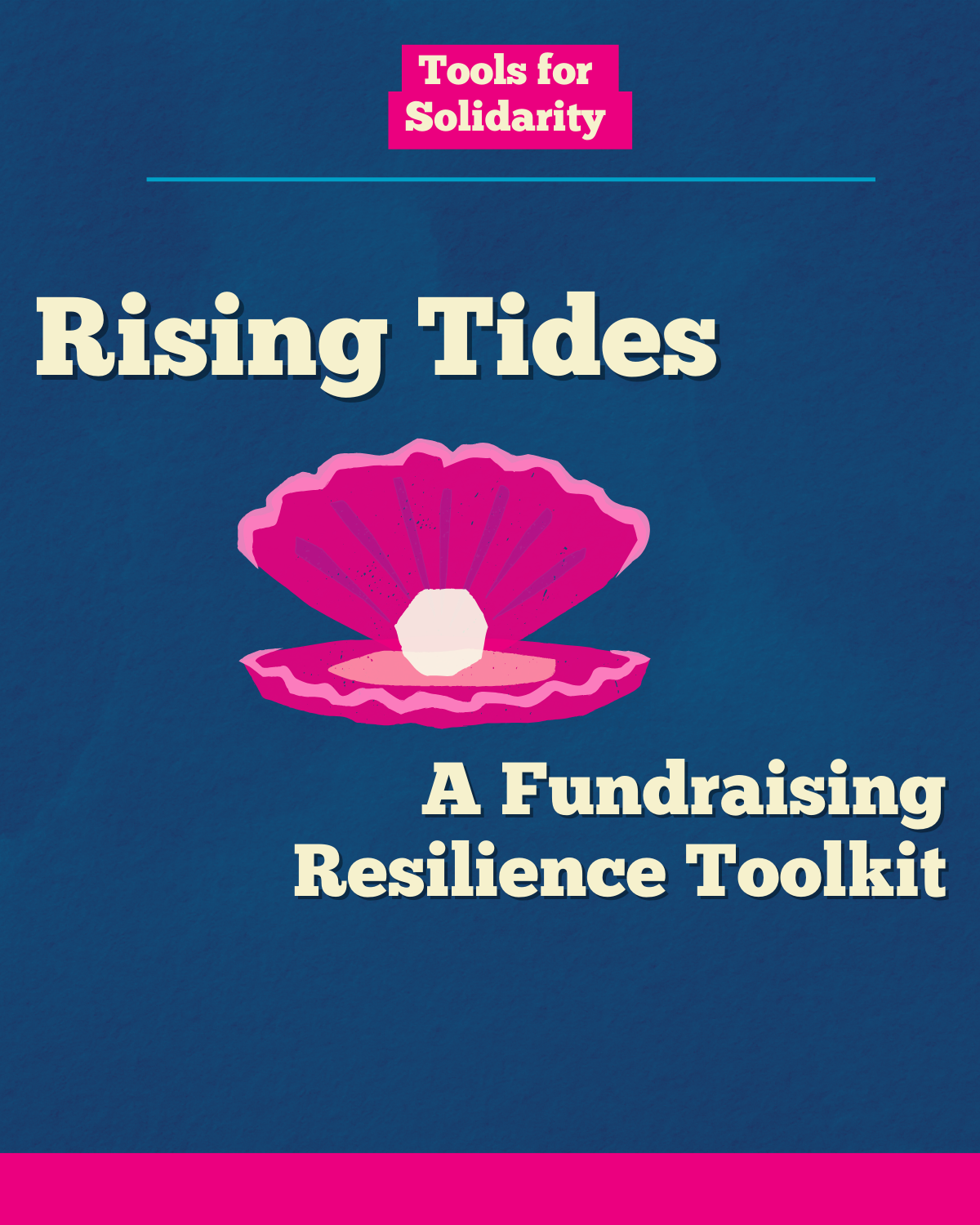
A collaboration between Terra Loire Gillespie, Robyn Schwarz, and Jesse Clarke.
Inside, you’ll find tools to help your team move from reactive scrambling to intentional strategy. There’s an opportunity assessment rubric for deciding when not to apply, reflection prompts on solidarity and collaboration, guidance on co-submissions and equitable MOUs, and a deep dive on integrating research into grant strategy without reproducing extractive methods. The toolkit also explores revenue diversification in a way that refuses to romanticize “social innovation” while governments download responsibility for public services onto the communities most harmed by their policies.
Rising Tides is for nonprofit workers, grassroots organizers, and community-led groups who know that our liberation isn’t going to be funded by the same systems that create harm—but who still need to navigate those systems to keep people safe right now. It’s for people who are tired of being told to “do more with less” and who want practical tools aligned with values of anti-racism, decolonization, disability justice, and queer and trans liberation.
We don’t pretend this toolkit is a fix for austerity. What it offers is a set of practical, politically-aware tools you can adapt for your context: ways to protect your team’s energy, build reciprocal partnerships, and make decisions that honour both survival and solidarity. It’s an invitation to think like a tidepool—anchored together, sharing risk, and insisting that we can rebuild the ecosystem, not just survive in its wreckage.
If your organization is navigating low tide and looking for tools that centre collective wellbeing over competition, Rising Tides is for you. Download the toolkit, adapt it freely, and share it with others in your tidepool. None of us gets out of austerity alone—but together, we can shape a rising tide that lifts all of us.
PS. You can find more Tools For Solidarity products at terraloire.com/tools-for-solidarity